

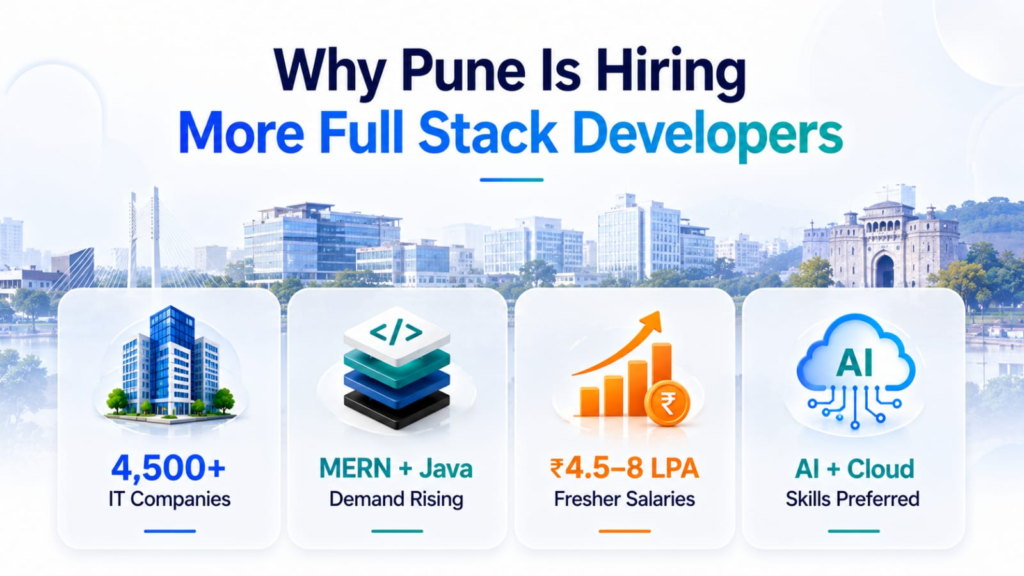
Pune now has more than 4,500 IT companies spread across Hinjewadi, Kharadi, Magarpatta, Baner, and Talawade. What changed in the last two years is the kind of developers companies are hiring. Most recruiters no longer want someone who only knows frontend or only backend. They want developers who can build complete products, deploy them, fix APIs, understand databases, and work with AI tools without needing constant supervision. That’s exactly why the demand for full-stack developers in Pune has exploded in 2026.
For students, career switchers, and working professionals, the confusion usually starts at the same place: which stack to learn, how much a full-stack developer course in Pune costs, whether placement support is real, and what salary actually looks like after finishing the course. This guide answers all of it without the usual marketing fluff.
Quick Facts: Full Stack Developer Course Pune (2026)
| Feature | Details |
| Course Duration | 4–6 Months |
| Fee Range | ₹ 28,000–₹ 79,000 |
| Popular Stacks | MERN, Java Full Stack, Python Full Stack |
| Average Fresher Salary | ₹ 4.5–8 LPA |
| Learning Mode | Online + Offline |
| Placement Support | Interview assistance + job support |
What is full-stack development, and why is it the most in-demand skill in 2026?
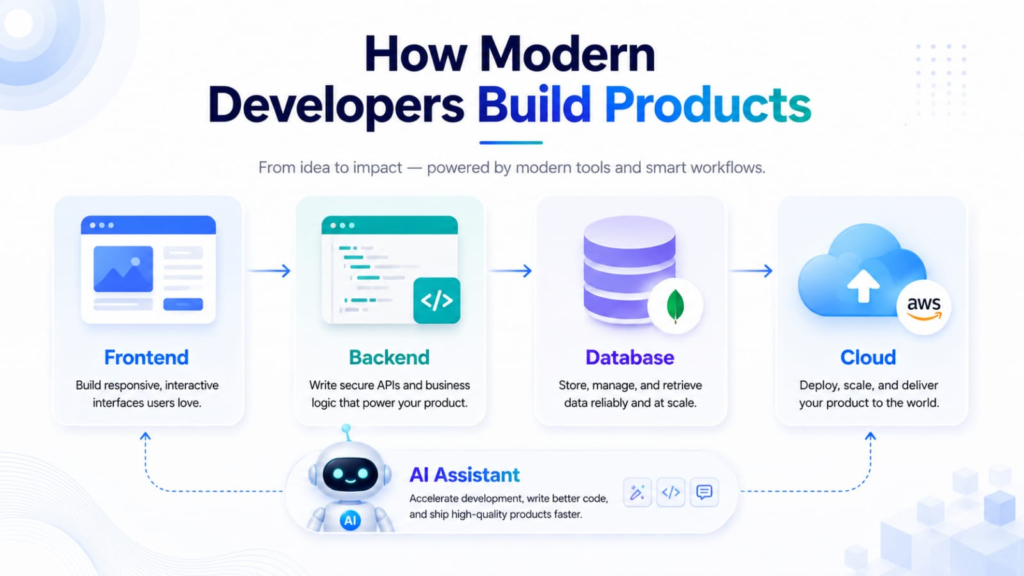
A full-stack developer is someone who can work on both the frontend and backend of an application. That means building what users see, handling the server logic behind it, managing databases, and deploying the final product live.
A few years ago, companies hired separate frontend and backend teams even for mid-sized projects. Now, startups and product companies prefer smaller, faster engineering teams where one developer can handle multiple responsibilities. That shift changed hiring patterns completely.
In Pune, especially, product startups and GCCs have started prioritising developers who can contribute from day one instead of specialists who only know one layer of development. The rise of AI-assisted coding tools also pushed this trend further because companies expect developers to move faster than before.
Frontend vs backend vs full stack simple comparison
| Role | What They Build | Technologies | Common Hiring Companies |
| Frontend Developer | User interface and design | HTML, CSS, JavaScript, React | Startups, SaaS firms |
| Backend Developer | APIs, servers, databases | Node.js, Java, Spring Boot | Banking, enterprise tech |
| Full Stack Developer | Complete application | MERN, Java Full Stack | Product companies, GCCs, MNCs |
The biggest reason students now choose a full-stack developer course in Pune is simple: companies want flexibility. A developer who can debug frontend issues, connect APIs, and deploy projects to AWS becomes far more valuable than someone limited to a single role.
Why full-stack demand is surging in Pune in 2026
Hinjewadi Phase 3 alone has seen major expansion from global capability centres, with companies building engineering teams locally instead of outsourcing entire projects abroad. At the same time, startups in Baner and Kharadi are increasingly adopting the MERN stack because JavaScript now works seamlessly across both frontend and backend development.
That unification matters more than most students realise. Learning one ecosystem shortens development cycles, speeds up hiring, and makes developers more flexible across projects. That’s one of the biggest reasons MERN and Java Full Stack roles continue dominating Pune’s tech hiring market in 2026.
Industry reports from Nasscom and Zinnov also point toward continued growth in India’s GCC and product engineering ecosystem, with Pune emerging as one of the country’s strongest technology hiring hubs for application development, cloud, and full-stack roles.
Full-stack developer course fees in Pune: an honest breakdown (2026)
This is usually where institutes become vague. Some advertise impossibly low pricing and then upsell everything later. Others charge premium fees mainly for branding. The real answer depends on the depth of training, project exposure, and placement support attached to the course.
Fee range across different institute types
| Institute Type | Fee Range | Duration | What’s Included |
| Budget / Bootcamp | Rs. 15,000–Rs. 28,000 | 2–3 Months | Basic curriculum, self-paced |
| Mid-tier Institutes | Rs. 28,000–Rs. 50,000 | 4–6 Months | Live projects, mentorship, placement support |
| Premium Brands | Rs. 60,000–Rs. 1,20,000 | 6–12 Months | ISA models, premium branding |
| Online Platforms | Rs. 500–Rs. 5,000 | Self-paced | Recorded content only |
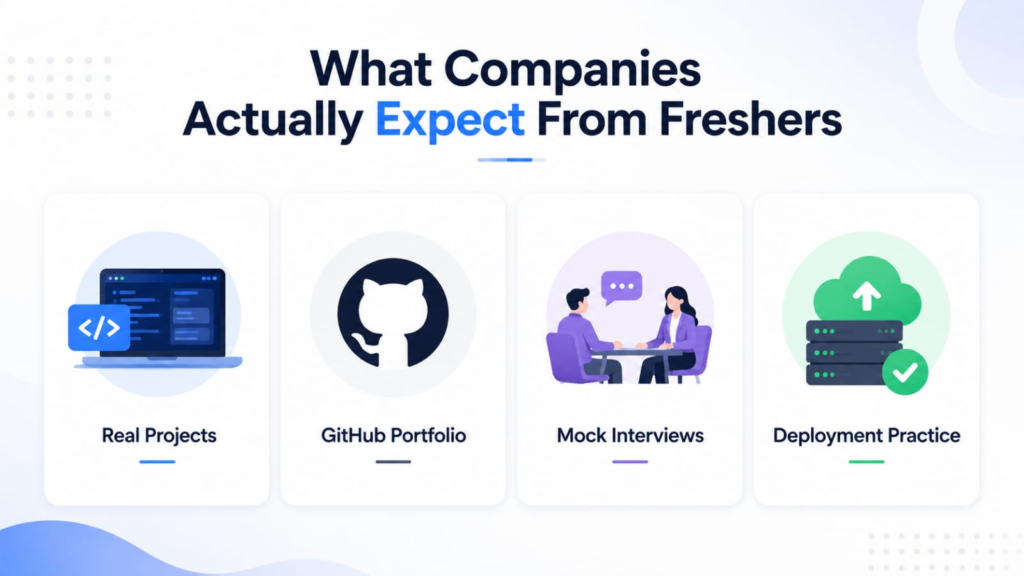
One thing students usually discover too late is that cheap courses often skip project reviews, mock interviews, and deployment training. Those are the exact areas recruiters test during interviews.
What’s usually included in a proper full-stack course fee
A strong full-stack developer course in Pune generally includes:
- Live interactive classes
- Recorded lecture backup
- GitHub portfolio projects
- Resume building
- Mock technical interviews
- Internship support
- Job assistance
- Lifetime job alerts
- Aptitude and communication preparation
That’s where the difference between “learning tutorials” and becoming employable starts showing up.
EMI and instalment options matter more than people admit
A large percentage of students entering full-stack training are either fresh graduates or professionals trying to switch careers after stagnating in support roles. Flexible EMI structures matter because most learners are already balancing financial pressure.
Many Pune institutes now offer monthly instalments or zero-interest payment options for longer programmes.
Is the full-stack course fee worth it?
The math becomes surprisingly straightforward when viewed realistically.
A ₹40,000 course leading to a ₹4.5–6 LPA starting package changes the entire return-on-investment conversation. Even a conservative fresher’s salary often recovers the course fee within the first year of employment.
What matters more is whether the training actually makes someone interview-ready. Plenty of students finish courses still unable to explain their own projects confidently. That gap is usually where placements fall apart.
Full-stack developer course syllabus: what students actually learn
Most course pages throw around stack names without explaining what learners genuinely build. A proper syllabus should feel progressive. Each module should solve a real development problem, not just complete theory chapters.
Module 1: Frontend foundations
Everything starts here because every application still needs a usable interface.
Students usually begin with:
- HTML5 semantic structure
- CSS3 layouts
- Flexbox and Grid
- Responsive design
- Bootstrap 5
- Mobile-first development
This stage looks simple from the outside, but weak frontend fundamentals become painfully obvious later during React development.
Module 2: JavaScript and TypeScript
This is where most beginners either gain confidence or get overwhelmed.
Core topics include:
- ES6+ concepts
- DOM manipulation
- Functions and closures
- Async/await
- API handling
- Error management
- TypeScript basics
TypeScript has become especially important in Pune product companies because large teams now prefer structured, scalable codebases over raw JavaScript.
Module 3: Frontend framework (React.js or Angular)
Once JavaScript becomes comfortable, students move into frameworks.
MERN stack tracks generally focus on React.js:
- Components
- Hooks
- State management
- Context API
- Redux
- Routing
- Form handling
Java Full Stack tracks often pair Spring Boot with Angular because enterprise systems still heavily rely on Angular architecture.
One thing recruiters quietly check during interviews is whether students actually understand state management or simply copied tutorial projects from YouTube.
Module 4: Backend development
This is where applications start becoming functional products.
MERN stack learners usually study:
- Node.js
- Express.js
- REST APIs
- Authentication
- JWT
- Middleware
Java Full Stack learners typically cover:
- Core Java
- Spring Boot
- MVC architecture
- API development
- Authentication systems
Most students initially fear backend development because it feels less visual. Ironically, backend skills are often what separate average candidates from strong hires.
Module 5: Databases
Modern developers are expected to work with both SQL and NoSQL systems.
Typical coverage includes:
- MongoDB
- MySQL
- PostgreSQL
- CRUD operations
- Schema design
- Indexing
- Joins and relationships
Understanding when to use SQL versus NoSQL matters more than memorising commands.
Module 6: DevOps and deployment
This module became critical once companies started expecting developers to deploy applications independently.
Students usually learn:
- Git and GitHub
- Docker basics
- AWS EC2 and S3
- CI/CD fundamentals
- Deployment pipelines
Developers with deployment knowledge often secure stronger, fresher packages because companies save onboarding time.
Module 7: Gen AI integration (2026 update)
This is the biggest curriculum shift happening right now.
Modern full-stack programmes increasingly include:
- OpenAI API integration
- Prompt engineering basics
- AI-assisted coding workflows
- GitHub Copilot
- LangChain fundamentals
Companies no longer treat AI exposure as a bonus skill. In many interviews, it’s becoming an expected baseline.
Every strong full-stack course should also include mini-projects throughout the learning journey. Building projects only after the syllabus ends usually leads to shallow portfolios with little originality.
Skills needed to become a full-stack developer in 2026
The market changed dramatically after AI coding tools became mainstream. Recruiters now care less about memorising syntax and more about problem-solving ability.
Must-have technical skills
A modern full-stack developer should be comfortable with:
- JavaScript or TypeScript
- React.js or Angular
- Node.js or Spring Boot
- REST APIs
- SQL and NoSQL databases
- Git and GitHub
- Cloud basics (AWS)
- Docker fundamentals
Students who skip Git or deployment often struggle during technical rounds because companies expect collaborative development knowledge even from freshers.
Skills that increase salary significantly
Certain combinations now consistently command higher packages in Pune.
The highest-paying stack combinations in 2026 include:
- MERN + TypeScript + AWS
- Java Spring Boot + React
- Full Stack + AI API integration
- Full Stack + System Design basics
Developers who understand CI/CD pipelines and cloud deployment usually receive noticeably stronger offers than candidates limited to local development environments.
Soft skills hiring managers quietly test
This part rarely appears on institute brochures, but recruiters absolutely evaluate it.
Interviewers often judge:
- Communication during standups
- Ability to explain project architecture
- Collaboration habits
- Debugging mindset
- Code review behaviour
- Problem breakdown skills
Many technically decent candidates lose opportunities simply because they cannot explain their own projects clearly.
Which stack should students choose: MERN or Java Full Stack?
| Stack | Best For |
| MERN Stack | Startups, SaaS companies, fastest entry into product development |
| Java Full Stack | MNCs, banking tech, enterprise systems |
MERN usually offers a quicker path into startups and modern product companies. Java Full Stack remains extremely strong in enterprise hiring across Pune’s larger organisations.
Full-stack developer salary in Pune: fresher to senior (2026)
Salary discussions online are usually either exaggerated or outdated. Real compensation depends heavily on projects, stack choice, communication skills, and whether the candidate can clear technical interviews confidently.
Salary by experience level
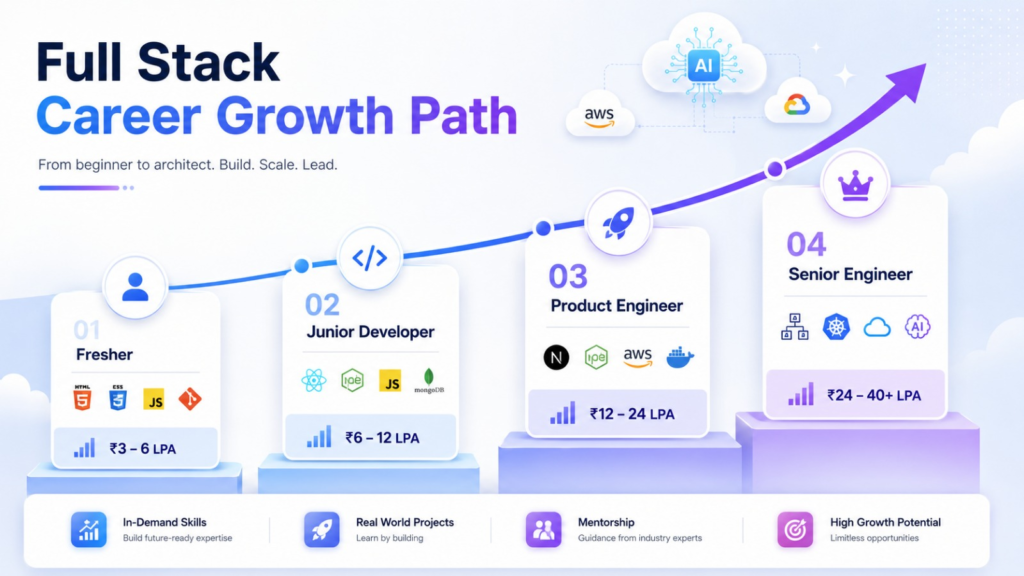
| Experience Level | Salary Range (Pune) | Notes |
| Fresher (0–1 Year) | Rs. 3.5–6 LPA | Strong portfolios may reach Rs. 6–8 LPA |
| Junior (1–3 Years) | Rs. 6–10 LPA | Job switches matter heavily |
| Mid-Level (3–5 Years) | Rs. 10–18 LPA | Product companies pay more |
| Senior (5+ Years) | Rs. 18–35 LPA | AI + Cloud adds major premium |
| Remote Global Roles | Rs. 25–45 LPA | US/EU startups hiring remotely |
One pattern repeatedly shows up in Pune’s hiring market: portfolio quality often matters more than certificates once interviews begin.
Stack-wise salary differences
MERN developers with TypeScript and AWS knowledge currently attract some of the fastest-growing salary offers in Pune startups.
Java Full Stack developers remain highly valuable in:
- Banking tech
- Enterprise SaaS
- Insurance systems
- Large MNC engineering teams
Python Full Stack demand is also rising because AI-driven companies increasingly prefer developers who are comfortable working with automation and machine learning workflows.
Hinjewadi startups generally move faster and pay aggressively for adaptable developers. Kharadi-based enterprise firms often provide more stable long-term growth.
Remote work changed earning potential completely
This shift still surprises many students.
A skilled full-stack developer sitting in Pune can now work for US or European startups remotely. Platforms like Upwork and Toptal made global freelance hiring normal for engineering teams.
Developers with strong GitHub portfolios, deployment experience, and communication skills regularly secure remote opportunities paying significantly above local salary ranges.
Career scope of full-stack development in 2026
A lot of students still ask whether full-stack development is “future-proof.” The better question is whether companies can realistically operate without developers who understand complete systems.
Right now, the answer is no.
Job roles that full-stack developers can target
Typical roles include:
| Job Role | Average Salary |
| Full Stack Engineer | ₹5–10 LPA |
| MERN Stack Developer | ₹4.5–9 LPA |
| Java Full Stack Developer | ₹5–12 LPA |
| Product Engineer | ₹8–18 LPA |
| Platform Engineer | ₹10–20 LPA |
| AI-Integrated Developer | ₹12–25 LPA |
The newer AI-integrated developer role is growing especially fast because companies want engineers capable of combining APIs, automation, and AI workflows into existing products.
Industries hiring full-stack developers in Pune
Some of Pune’s strongest hiring sectors include:
- Fintech
- Edtech
- Healthtech
- SaaS
- Logistics tech
- Manufacturing automation
- Global Capability Centres
Companies actively hiring include:
- Persistent Systems
- Infosys
- KPIT Technologies
- Bajaj Finserv
Typical 5-year growth path
Most developers follow a progression similar to this:
- Year 0–1: Fresher / Junior Developer
- Year 1–3: Product company switch
- Year 3–5: Senior Engineer / Team Lead
- Year 5+: Architect, Engineering Manager, freelance consultant, or startup founder
Developers who combine cloud, DevOps, and AI integration skills consistently move faster through this ladder.
Who can join a full-stack course in Pune?
One of the biggest misconceptions is that only computer science graduates can become developers. Pune’s training ecosystem changed years ago.
Fresh graduates
B.Tech, BCA, and BSc CS students remain the most common profiles entering full-stack development programmes.
Strong portfolios combined with internship exposure usually help graduates secure their first role within a few months after course completion.
Working professionals
A large number of learners now come from:
- Support roles
- Testing backgrounds
- Networking
- Non-development IT jobs
Weekend and hybrid batches made upskilling far more accessible for working professionals trying to transition into development careers.
Non-IT students
Students from BCom, BBA, MBA, and even completely unrelated backgrounds increasingly enter full-stack development through beginner-friendly tracks.
The transition is rarely instant, but structured guidance makes the process far less intimidating than most people assume.
| Profile | Recommended Track | Prior Coding Needed | Expected Outcome |
| B.Tech / BCA | MERN or Java Full Stack | No | Entry-level developer role |
| Working Professional | Java Full Stack | Basic logic helpful | Salary switch |
| Non-IT Graduate | MERN / Python Full Stack | No | Career transition into IT |
Why do many students choose Teknowell Pune for full-stack training
Students usually compare curriculum first, but long-term outcomes often depend more on mentorship quality and interview preparation.
Job assistance that goes beyond certificates
A lot of institutes advertise placement support without explaining what that actually includes.
Proper job assistance usually involves:
- Resume preparation
- LinkedIn optimisation
- Mock interviews
- Technical assessments
- Company referrals
- Continuous interview scheduling
Before joining any institute, most learners eventually check the placement record because interview preparation matters far more than certificates alone.
There’s a meaningful difference between “sharing job openings” and actively preparing students for hiring rounds.
Internship exposure during learning
One major advantage of integrated internship models is that students start building portfolios while learning instead of waiting until the course ends.
Recruiters usually trust project-based experience more than certificate-heavy resumes with no real implementation.
Trainers with industry exposure
Students generally learn faster when instructors explain concepts through real production examples instead of textbook theory.
Experienced trainers tend to spend more time teaching debugging logic, deployment mistakes, and project architecture decisions — the exact areas beginners struggle with during interviews.
Smaller batches also make a noticeable difference. Students falling behind in backend logic or React concepts often need direct mentoring instead of mass-recorded teaching formats.
For students searching for the best IT training institute in Pune, the important thing isn’t flashy marketing. It’s whether the training genuinely makes interviews feel manageable instead of terrifying.
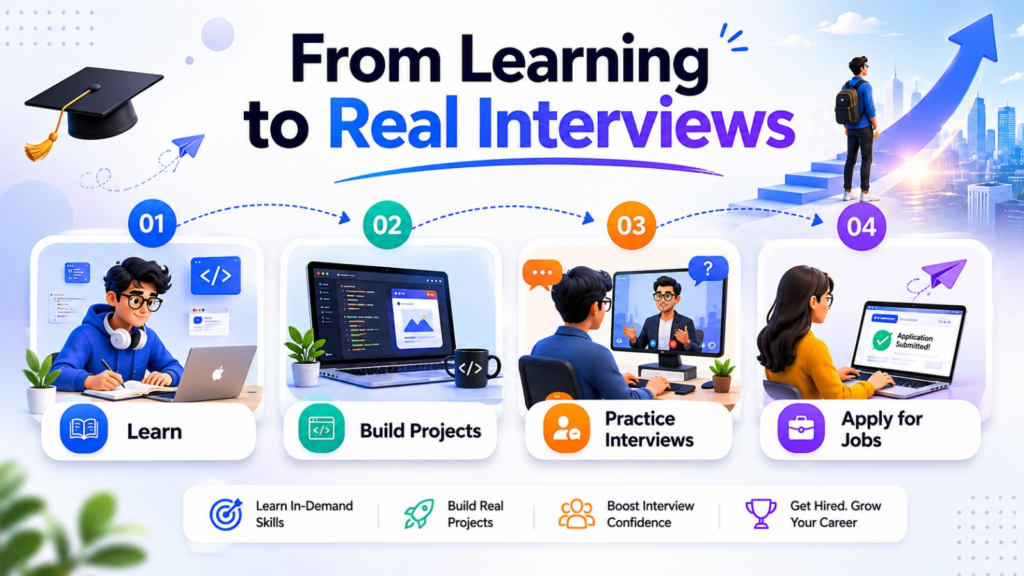
Start your full-stack journey, book a free demo at Teknowell Pune
The difference between students who complete tutorials and students who actually become developers usually comes down to structure, consistency, and real interview preparation. A good full-stack developer course in Pune should do more than teach syntax. It should prepare students for hiring pressure, technical rounds, project discussions, and real-world development work.
Teknowell offers online and offline full-stack classes in Chinchwad, Pune, with project-based learning, internship exposure, and dedicated job assistance support for freshers, working professionals, and career switchers.
If the goal is to build real projects, clear interviews confidently, and enter Pune’s growing IT market with practical skills instead of just certificates, the next step is simple.
Book Free Demo Class at Teknowell Pune